This year, a friend introduced me to a Texas tradition I somehow hadn’t encountered before: the homecoming mum.
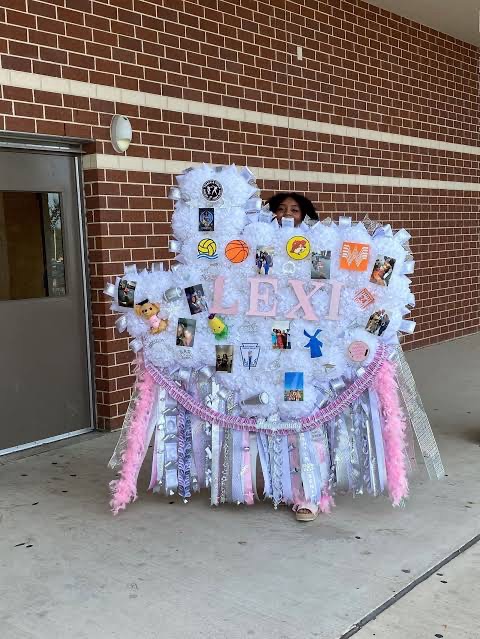
Her daughter was getting one for school, and she showed me pictures. I wasn’t prepared for what I saw. An enormous flower, layers of ribbons, decorations hanging everywhere. It was so large it needed to hang around the neck and covered practically the entire front of the body.
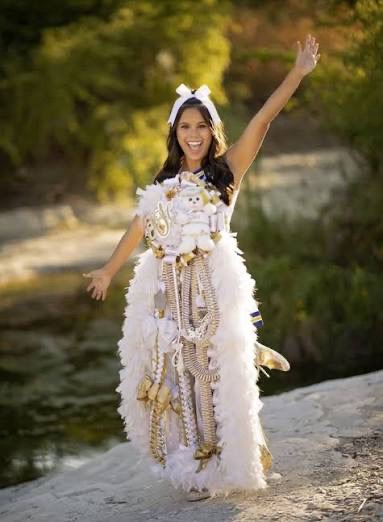
My first thought? That looks absolutely ridiculous.
My next thought was: How did this become a thing?
So I looked it up.
What began decades ago as a simple chrysanthemum corsage had grown into an elaborate expression of school spirit. Fresh flowers gave way to artificial ones. Ribbons got longer. Names, graduation years, teddy bears, cowbells, and even lights joined the arrangement. Some now reach nearly to the ground.
Somewhere along the way, a flower became a wearable scrapbook.
Learning that history helped me see what I’d missed in the pictures. There was creativity involved. Time. Personal touches. For the students and families making or choosing these mums, there were probably memories attached to every ribbon.
I still couldn’t quite get past the size. But then I thought about home.
Growing up near Philadelphia, I knew about the Mummers Parade on New Year’s Day. Elaborate costumes, feathers, sequins, and music were part of the holiday.
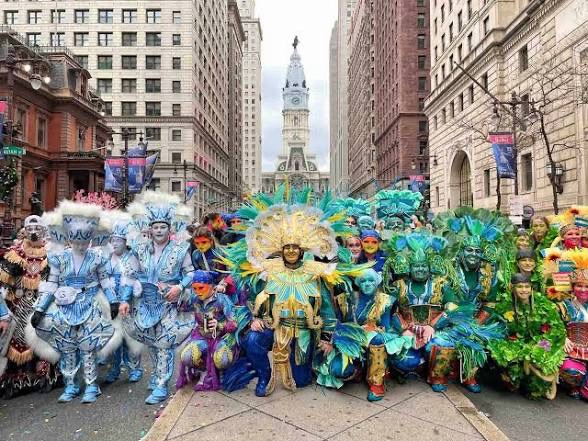
And back when we only had local television stations and no cable, I remember turning on the TV hoping for New Year’s Day football and finding the Mummers instead. When you wanted to watch a game, a parade full of feathers and sequins wasn’t exactly what you had in mind. But there it was, a Philadelphia tradition taking over the screen.
You didn’t need to understand every part of it to know it belonged to the place you called home.
The similar names briefly made me wonder whether Texas mums and Philadelphia Mummers were connected. From what I found, they weren’t. But the comparison made me pause. Here I was questioning these enormous homecoming flowers, having grown up with a New Year’s celebration that could look just as puzzling to someone from somewhere else.
With Halloween on my mind, another memory came back: Mischief Night.
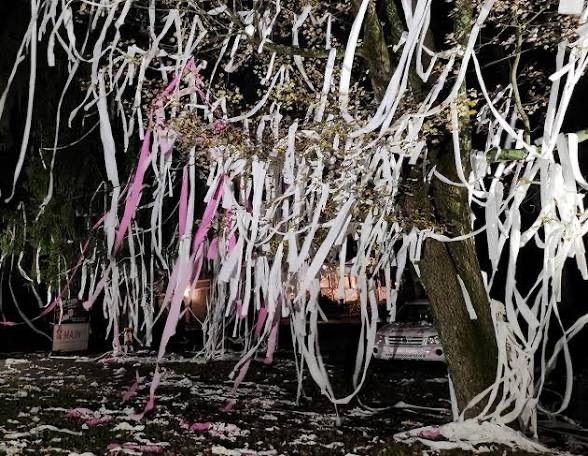
Where I grew up, that was what we called the night before Halloween. I remember the evidence the next morning: toilet paper draped through trees and eggs splattered against houses.
Being familiar with it didn’t make the mess any more pleasant for whoever had to clean it up. But the name and the expectation were part of growing up there. Only later did I realize that other places had different names for that night, or no particular tradition at all.
Try explaining that one to someone unfamiliar with it.
“Well, the night before the kids dress up and ask for candy, you might find toilet paper hanging from your trees.”
Saying it out loud makes you hear it a little differently.
And then there’s Groundhog Day. In Punxsutawney, Pennsylvania, people gather to see whether a groundhog sees its shadow and what that supposedly tells us about the weeks of winter ahead.
We look to a groundhog for a weather forecast.
When you grow up hearing about it, you barely question it. But imagine encountering that tradition for the first time.
Holidays are full of things like that.
On Halloween, children dress in costumes and knock on neighbors’ doors asking for candy. At Christmas, we bring a tree into the house and decorate it. On New Year’s Eve, we count backward together and cheer when the clock strikes midnight.
Move any of those things to an ordinary Tuesday, and suddenly they look a little strange.
But it also makes me wonder why we wait.
We can put on a costume, decorate the house, gather friends around a table, or tell someone how much they mean to us any day of the year. Somehow, having a date on the calendar gives us permission to do things we might otherwise put off or feel a little silly doing.
I understand the attachment. The anticipation and the memories are part of what make those days special. A familiar meal, a decoration unpacked every year, or a gathering we can count on can connect us to people and places we miss.
Still, if we enjoy the gathering, the playfulness, and the sense of connection so much, maybe we could make a little more room for them throughout the year.
That’s something I appreciate about spending time in different places. You encounter things that make you stop and wonder. Sometimes your first reaction is curiosity. Sometimes it’s disbelief. And sometimes, if you give it a little time, it brings you back to something familiar in your own life.
That Texas mum started out looking strange to me. It ended up making me think about all the things I’ve accepted without a second thought, simply because I grew up with them.
I’m still not sure I could wear one that reaches my ankles. But I’m glad my friend showed me those pictures.
What tradition from your hometown or family feels perfectly normal to you, but might seem strange to someone else? And what part of your favorite holiday would you enjoy bringing into an ordinary day?


Leave a Reply